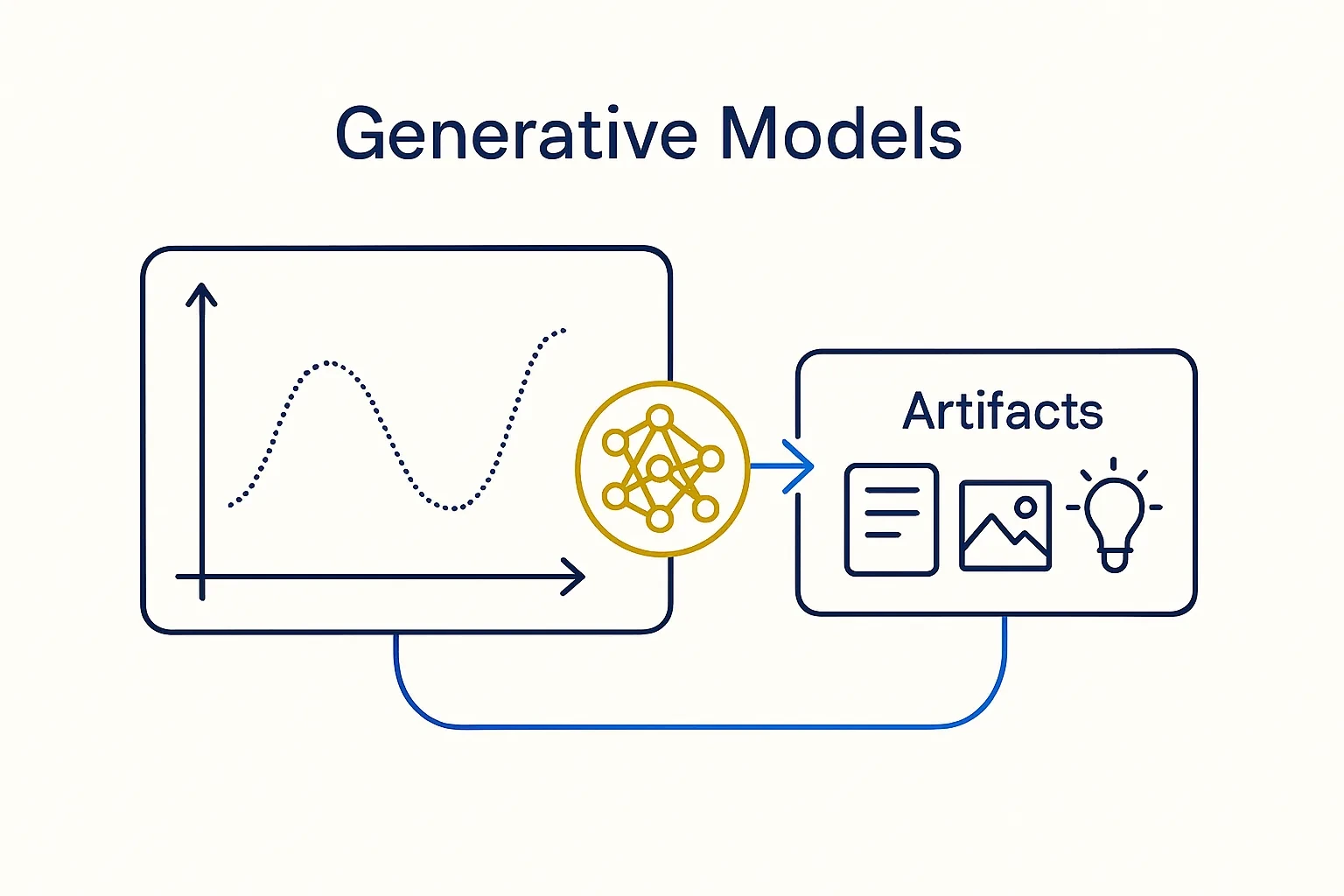
Not every model can drive a platform. A boxes-and-lines diagram communicates; a generative model produces. The difference is completeness and precision: a generative model carries enough typed detail — entities, attributes, relationships, mappings, history semantics, quality rules — that SQL, tests, lineage, and documentation can be derived from it mechanically, with no human filling in the gaps between model and code. This reframes modeling effort. In documentation-driven shops, model detail is overhead — it will be out of date next quarter anyway. In MDDE, every increment of model richness is capability: add history semantics to the model and deterministic SQL generation can produce the temporal logic; add quality rules and the tests come out with the pipeline. The model's richness sets the ceiling on what the platform can generate — which is the master line in one sentence: the magic isn't in the model, it's in the structure you give it. The concept sits in the AI & innovation category deliberately (and despite sharing a name with generative AI, means almost the opposite — deterministic derivation, not probabilistic output). Generative models are also what make AI safe to add later: a model rich enough to generate from is rich enough to verify against, which is the stepping stone toward autonomous data engineering.
← All concepts & vocabulary