Why this is in my collection
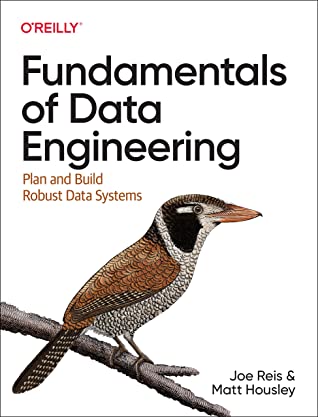
Reis and Housley wrote the book that gave data engineering a spine. Their central device — the data engineering lifecycle (generation, storage, ingestion, transformation, serving) wrapped in undercurrents like security, data management, orchestration, and software engineering practice — is a deliberate move up the abstraction ladder: away from tool tutorials, toward the responsibilities that persist while the tool market churns underneath. In a discipline that was defining itself by its stack ("we're a Spark shop"), they insisted on defining it by its lifecycle, and that reframing stuck across the entire industry.
It is in my collection, rated four and a genuine favorite, because it is the consensus map of the field I operate in — the book every serious data engineer has read, which makes it the shared vocabulary I can build on when writing or teaching. I do not agree with everything (the modeling treatment is thinner than a modeler would want, which is precisely the gap my own work fills), but as the statement of what data engineering is in the 2020s, nothing else comes close.
Its most useful trait for my purposes is the technology-agnostic stance. Reis and Housley repeatedly advise choosing boring, proven components and evaluating tools against lifecycle stages rather than fashion. That is the data-engineering twin of my own argument: invest in the durable layer, treat the tooling as replaceable.
Highlights
- Define the discipline by lifecycle, not by stack — generation, storage, ingestion, transformation, serving as the permanent responsibilities while tools are merely today's bindings to them; the data-engineering twin of the MDDE claim that the model outlives the platform.
- The undercurrents are where failures live — security, data management, DataOps, orchestration, and software-engineering practice run through every lifecycle stage; this cross-cutting layer is where the rules pillar belongs, and the book names it without fully building it.
- Choose boring technology by lifecycle fit and total cost of ownership — Reis and Housley's repeated advice to resist novelty is the practical corollary of investing in the durable layer: proven components under a stable model beat fashionable ones under none.
- Every upstream decision must trace to a serving need — the data engineer's real customer is the downstream consumer; a traceability discipline that a model-driven approach can make mechanical instead of aspirational.
- The modeling chapter is conspicuously thin — the book's lightest treatment is data modeling itself, which reads as the field's confession: the 2020s optimized pipelines and forgot the model — precisely the gap MDDE exists to fill.
- Moving up the abstraction ladder is the career move — engineers who define their practice by responsibilities survive platform churn; the ones who define it by their current tool get churned with it.
My application
I use the data-engineering lifecycle as a shared map when talking to engineering teams: MDDE slots into their transformation and orchestration stages as "this part of your lifecycle can be generated from the model." Having the industry-standard frame to point at makes the pitch land faster than inventing my own.
The book also sharpened my positioning by omission: its relatively light treatment of data modeling is the clearest evidence that the field optimized pipelines while forgetting the model — the exact gap MDDE and my writing address. I cite Reis and Housley for the lifecycle, then argue the missing chapter is the one where the model drives the lifecycle.
Key ideas worth citing
- The data engineering lifecycle — generation, storage, ingestion, transformation, serving — is the durable definition of the discipline; tools are just current bindings to its stages.
- The undercurrents (security, data management, DataOps, orchestration, software engineering) run through every stage and are where most real-world failures originate.
- Choose technologies by lifecycle fit and total cost of ownership, not novelty — "boring" proven components are usually the robust choice.
- The data engineer's real job is serving downstream consumers; every upstream decision should be traceable to a serving need.
- Abstraction beats stack-loyalty: defining your practice by responsibilities rather than tools is what survives platform churn.
Related
- → concept: model-driven-data-engineering (the missing chapter: the model driving the lifecycle)
- → concept: structure-beats-magic
- → concept: the-missing-system (lifecycle covers data + pipelines; rules remain the forgotten pillar)
- → article: what data engineering forgot about modeling (candidate)
Highlights on this page are generated with the help of AI.