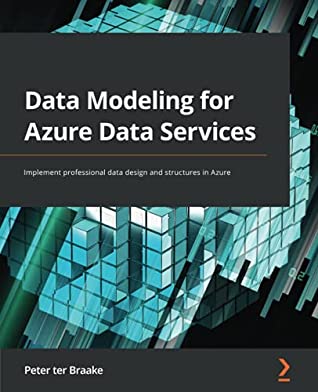
Why this is in my collection
From the publisher:
Data is at the heart of all applications and forms the foundation of modern data-driven businesses. With the multitude of data-related use cases and the availability of different data services, choosing the right service and implementing the right design becomes paramount to successful implementation. Data Modeling for Azure Data Services starts with an introduction to databases, entity analysis, and normalizing data. The book then shows you how to design a NoSQL database for optimal performance and scalability and covers how to provision and implement Azure SQL DB, Azure Cosmos DB, and Azure
Highlights
- The model comes before the service choice — ter Braake's structure (entity analysis and normalization first, Azure services after) quietly makes the MDDE point: understand the data's shape, then pick the platform, never the reverse.
- One logical model, many physical designs — the same entities land differently in Azure SQL, Cosmos DB, and Synapse (normalized, embedded/denormalized, star-schema); a concrete demonstration that physical design is a projection of the logical model per platform — exactly the projection step generation automates.
- NoSQL doesn't mean no model — designing Cosmos DB containers around partition keys and access patterns is intensive modeling under a different objective function; schema-on-read moves the modeling, it never removes it.
- Denormalization is a rule-governed trade, not a shortcut — the book treats when-to-embed and when-to-reference as decisions with explicit criteria (cardinality, update frequency, query patterns); even the "flexible" designs run on rules.
- Analytical and operational workloads deserve different shapes — star schemas for Synapse next to normalized OLTP designs restate Kimball-vs-3NF as a workload question; the shape follows the question the data must answer.
- A 2021 Azure catalog with a durable core — the service specifics will date like every cloud book, but the modeling-first workflow it teaches survives every Azure rebrand; another exhibit for models-outlive-platforms.
Highlights on this page are generated with the help of AI.