Why this is in my collection
From the publisher:
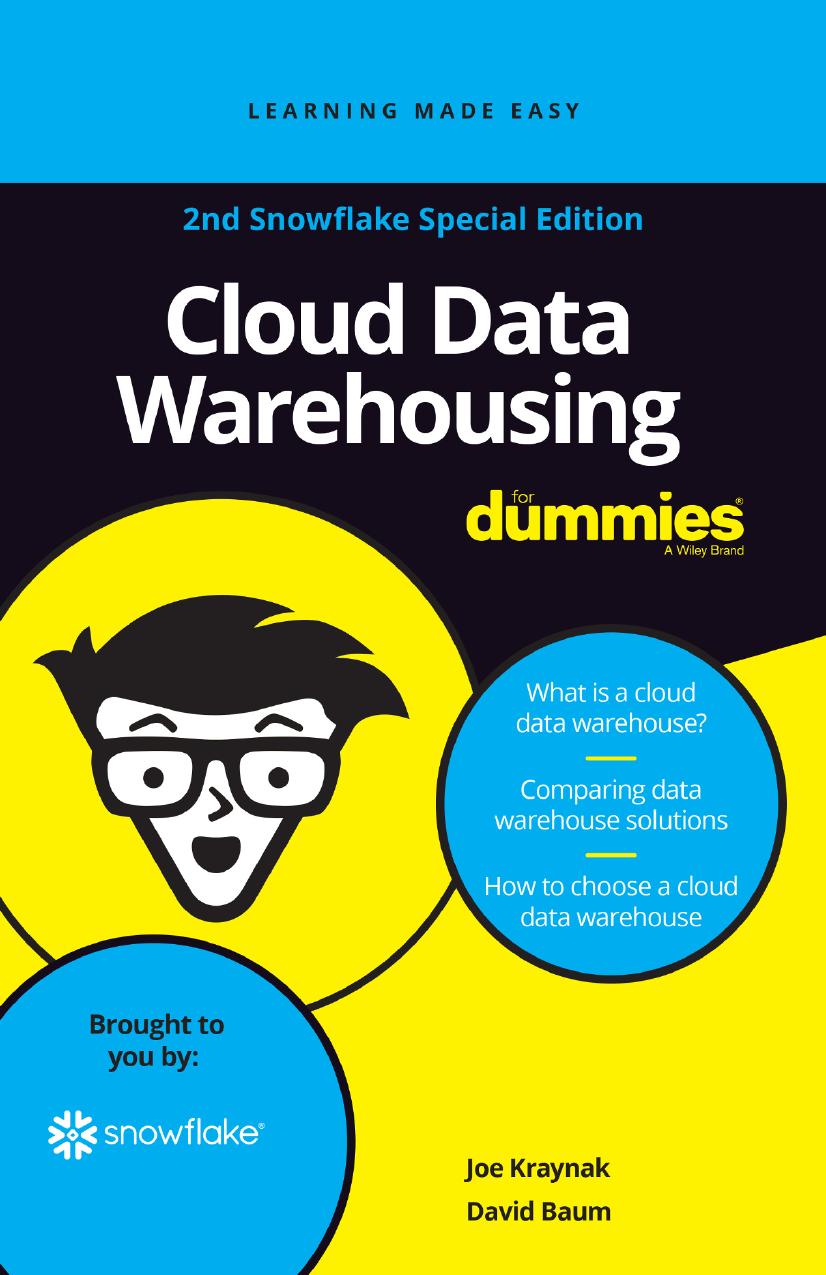
What is a cloud data warehouse? Comparing data warehouse solutions How to choose a cloud data warehouse Achieve a competitive advantage with the power of cloud data warehousing Modern organizations now have access to exponentially larger amounts of data they can analyze to gain the deepest insights possible. In addition, organizations want to securely share data - and acquire shared data - across their business units, within their business ecosystems, and beyond by using data exchanges to monetize that data. But accessing that data poses even greater challenges that continue to plague traditio
Highlights
- Separating storage from compute dissolved the sizing problem — Snowflake's signature architecture lets capacity scale independently per workload; the platform innovation is real, but notice what it does not touch: nothing about what the data means.
- Elasticity removes an excuse, not a discipline — when infrastructure constraints disappear, the remaining bottleneck stands exposed: modeling, integration, and semantics; cheap compute makes bad models fail faster, not less.
- Data sharing without copying changes the distribution game — live cross-organization access via exchanges previews the data-product era; but shared data is only as usable as the shared understanding of its keys and definitions.
- Vendor booklets are the buzzword supply chain — a "For Dummies" special edition is marketing literature with genuine pedagogy inside; useful both for the architecture basics and as a specimen of how platform vocabulary gets manufactured and spread.
- The pitch is always the same: this platform ends your data problems — warehouse appliances, Hadoop, and now cloud warehouses each claimed it; the durable skill is distinguishing what a platform genuinely solves (elasticity, concurrency) from what only modeling can (meaning, integration, rules).
Highlights on this page are generated with the help of AI.